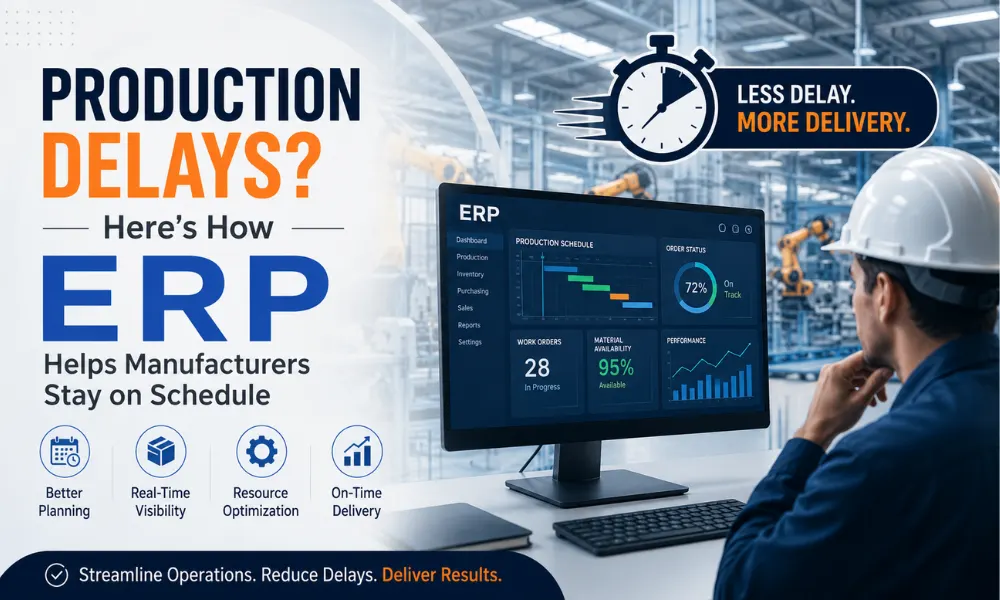
In manufacturing, time is money—literally. Every hour a production line sits idle or a shipment misses its deadline, it costs the business in lost revenue, wasted labor, and strained customer relationships. Yet production delays remain one of the most persistent challenges manufacturers face, regardless of size or industry.
The good news? Most production delays are preventable. With the right systems in place, manufacturers can identify potential disruptions before they happen, keep schedules on track, and respond to changes in real time. That’s exactly what a modern ERP (Enterprise Resource Planning) system is designed to do.
Why Do Production Delays Happen?
Most production delays aren’t random. They stem from predictable, fixable problems. Common culprits include:
- Inaccurate inventory data: Running out of raw materials because stock levels weren’t tracked in real time
- Poor communication between departments: Sales, procurement, and production working off outdated or siloed information
- Manual scheduling errors: Spreadsheets and paper based planning that can’t adapt to real time changes
- Equipment downtime: Lack of predictive maintenance leading to unexpected breakdowns
- Supply chain disruptions: Delayed shipments from vendors with no backup plan in place
- Lack of real time visibility: Managers finding out about a problem only after it has already caused a delay
Individually, these issues seem manageable. But without a centralized system connecting every part of the operation, they compound quickly—and that’s when schedules start slipping.
How ERP Helps Manufacturers Stay on Schedule
1. Real Time Inventory and Material Visibility
ERP systems give manufacturers a live view of raw material stock, work in progress inventory, and finished goods across every location. Instead of discovering a shortage mid production, teams get automated alerts when stock hits reorder thresholds, preventing last minute scrambles that stall the production line.
2. Smarter Production Scheduling
ERP software replaces manual, spreadsheet based planning with dynamic scheduling tools that account for machine capacity, labor availability, and material readiness. When something changes—such as a rush order, a delayed shipment, or a machine going offline—the schedule can be adjusted instantly, keeping production flowing instead of grinding to a halt.
3. Seamless Cross Department Communication
One of the biggest causes of delay is departments working in isolation. ERP connects sales, procurement, inventory, and production onto a single platform, so everyone is working from the same real time data. This eliminates the guesswork and miscommunication that often trigger scheduling conflicts.
4. Predictive Maintenance and Equipment Monitoring
Unplanned downtime is one of the costliest disruptions on a shop floor. Many ERP systems integrate with maintenance modules that track machine usage and flag equipment for servicing before it fails—shifting manufacturers from reactive repairs to proactive maintenance.
5. Supply Chain and Vendor Management
ERP platforms centralize supplier data, purchase orders, and delivery timelines, making it easier to track vendor performance and identify risks early. If a supplier is consistently late, manufacturers can spot the pattern and adjust sourcing strategies before it impacts production.
6. Data Driven Decision Making
With built in reporting and analytics, ERP gives production managers a clear picture of what’s working and what isn’t. Instead of reacting to delays after they happen, manufacturers can use historical and real time data to forecast demand, plan capacity, and prevent bottlenecks before they occur.
7. Improved Quality Control
Delays aren’t always about speed. Rework due to quality issues is a major hidden time sink. ERP systems track quality checkpoints throughout production, catching defects earlier and reducing the costly delays caused by scrapped batches or customer returns.
The Business Impact of Staying on Schedule
Manufacturers that successfully reduce production delays through ERP typically see:
- Faster order fulfillment and improved on time delivery rates
- Lower operational costs from reduced downtime and waste
- Stronger customer relationships built on reliability
- Better resource utilization across labor, machines, and materials
- Greater agility to respond to demand changes or supply disruptions
In a competitive manufacturing landscape, consistency and reliability aren’t optional. They are a differentiator.
Final Thoughts
Production delays are rarely caused by one single failure. They are usually the result of disconnected systems, limited visibility, and reactive planning. An ERP system addresses these root causes directly, giving manufacturers the real time insight and automation they need to keep production moving smoothly.
If your manufacturing operation is struggling with missed deadlines, inventory surprises, or scheduling chaos, it may be time to explore how a modern ERP solution can help.
Eqsoft helps manufacturers streamline production, improve scheduling accuracy, and eliminate the bottlenecks that lead to costly delays. Get in touch with Eqsoft today to see how the right ERP solution can keep your operations running on time, every time.
Keep Your Production on Schedule
Discover how Eqsoft’s ERP solutions help manufacturers eliminate delays, optimize scheduling, and boost production efficiency.
Book Your Free Demo Today